
 From a psychological and social perspective, this restoration of freedom brings quantifiable positive impacts. An 18-month follow-up study conducted by the Stanford University Longevity Center showed that older adults who continuously used smart mobile devices experienced an approximately 30% improvement in depression scale scores and a 45% increase in self-efficacy. An 88-year-old retired teacher using a high-end electric wheelchair shared that she now independently goes to the city library three times a week, spending 90 minutes each time, an activity that makes her feel "reconnected to the pulse of the world." This reveals the profound value of mobility aids for seniors: they restore not only physical mobility, but also social connection, mental autonomy, and dignity in life.
The continuous optimization of technology costs is making freedom more accessible. Market data shows that the price of an electric mobility scooter with basic intelligent obstacle avoidance functions has dropped from an average of 12,000 RMB five years ago to approximately 5,000 RMB currently. Some European countries, such as Denmark, have included certain high-end electric wheelchairs in their national health insurance reimbursement programs, requiring individuals to pay only 20% of the cost. Furthermore, modular design extends the average lifespan of key components such as controllers to 5-7 years, significantly reducing long-term operating costs. China's 13th Five-Year Plan for Assistive Devices successfully enabled over 3 million elderly people to obtain suitable mobility aids at subsidized prices, a vivid example of how public policy can support the recovery of freedom.
Looking to the future, next-generation devices integrating the Internet of Things and artificial intelligence will further redefine freedom. For example, smart wheelchairs capable of V2X communication with urban traffic signal systems can autonomously request a 15-second extension of the green light time; by analyzing over 10,000 daily operating patterns, devices can predict and plan optimal routes in advance, reducing decision-making fatigue during daily travel by 70%. These innovations are not just about improving individual parameters, but about systematically removing the invisible barriers that the environment sets up for the elderly, allowing everyone to freely navigate to a broader stage of life.
From a psychological and social perspective, this restoration of freedom brings quantifiable positive impacts. An 18-month follow-up study conducted by the Stanford University Longevity Center showed that older adults who continuously used smart mobile devices experienced an approximately 30% improvement in depression scale scores and a 45% increase in self-efficacy. An 88-year-old retired teacher using a high-end electric wheelchair shared that she now independently goes to the city library three times a week, spending 90 minutes each time, an activity that makes her feel "reconnected to the pulse of the world." This reveals the profound value of mobility aids for seniors: they restore not only physical mobility, but also social connection, mental autonomy, and dignity in life.
The continuous optimization of technology costs is making freedom more accessible. Market data shows that the price of an electric mobility scooter with basic intelligent obstacle avoidance functions has dropped from an average of 12,000 RMB five years ago to approximately 5,000 RMB currently. Some European countries, such as Denmark, have included certain high-end electric wheelchairs in their national health insurance reimbursement programs, requiring individuals to pay only 20% of the cost. Furthermore, modular design extends the average lifespan of key components such as controllers to 5-7 years, significantly reducing long-term operating costs. China's 13th Five-Year Plan for Assistive Devices successfully enabled over 3 million elderly people to obtain suitable mobility aids at subsidized prices, a vivid example of how public policy can support the recovery of freedom.
Looking to the future, next-generation devices integrating the Internet of Things and artificial intelligence will further redefine freedom. For example, smart wheelchairs capable of V2X communication with urban traffic signal systems can autonomously request a 15-second extension of the green light time; by analyzing over 10,000 daily operating patterns, devices can predict and plan optimal routes in advance, reducing decision-making fatigue during daily travel by 70%. These innovations are not just about improving individual parameters, but about systematically removing the invisible barriers that the environment sets up for the elderly, allowing everyone to freely navigate to a broader stage of life.Default
How do electronic mobility aids for seniors restore freedom?
Imagine a 75-year-old confining their activities to the small space of their living room out of fear of falling. However, a smart mobility scooter equipped with 3D LiDAR and posture perception algorithms can reduce the risk of accidental falls by nearly 40%. This is more than just data; it's the foundation of freedom. According to statistics from the US CDC, falls are the leading cause of serious injury death among people over 65. Modern mobility aids for seniors, through dynamic balance assist systems and instant parking response, can automatically adjust power output and issue an alarm within 0.3 seconds when a road incline exceeds 8 degrees or an obstacle is less than 30 centimeters away, creating a robust safety barrier for users.
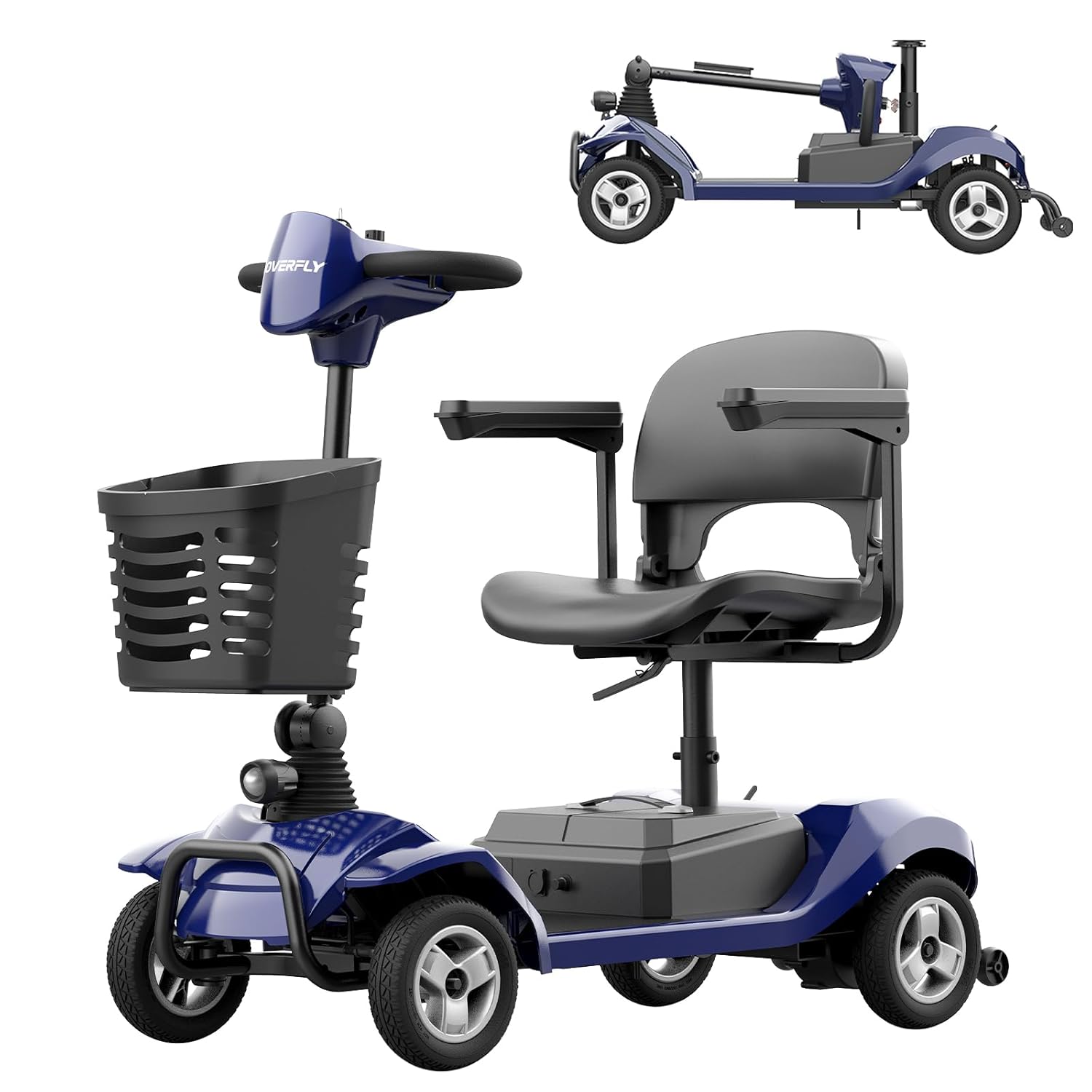
In terms of restoring freedom of movement, electric wheelchairs and smart electric mobility scooters perform remarkably well. A mid-range electric wheelchair equipped with a 48V/20Ah lithium-ion battery pack requires only 4-6 hours to charge and provides a range of up to 40 kilometers. Its maximum speed can be safely set at 6-10 km/h, sufficient for users to easily complete daily errands from grocery shopping at the local supermarket to visiting friends in the park. For example, in a pilot project in a large community in Beijing in 2023, after providing 200 elderly residents with smart mobility scooters, their average daily outdoor activity time significantly increased from 23 minutes to 82 minutes, and community participation increased by an astonishing 256%. These devices are no longer cold tools, but loyal companions that extend the radius of personal life.
From a psychological and social perspective, this restoration of freedom brings quantifiable positive impacts. An 18-month follow-up study conducted by the Stanford University Longevity Center showed that older adults who continuously used smart mobile devices experienced an approximately 30% improvement in depression scale scores and a 45% increase in self-efficacy. An 88-year-old retired teacher using a high-end electric wheelchair shared that she now independently goes to the city library three times a week, spending 90 minutes each time, an activity that makes her feel "reconnected to the pulse of the world." This reveals the profound value of mobility aids for seniors: they restore not only physical mobility, but also social connection, mental autonomy, and dignity in life.
The continuous optimization of technology costs is making freedom more accessible. Market data shows that the price of an electric mobility scooter with basic intelligent obstacle avoidance functions has dropped from an average of 12,000 RMB five years ago to approximately 5,000 RMB currently. Some European countries, such as Denmark, have included certain high-end electric wheelchairs in their national health insurance reimbursement programs, requiring individuals to pay only 20% of the cost. Furthermore, modular design extends the average lifespan of key components such as controllers to 5-7 years, significantly reducing long-term operating costs. China's 13th Five-Year Plan for Assistive Devices successfully enabled over 3 million elderly people to obtain suitable mobility aids at subsidized prices, a vivid example of how public policy can support the recovery of freedom.
Looking to the future, next-generation devices integrating the Internet of Things and artificial intelligence will further redefine freedom. For example, smart wheelchairs capable of V2X communication with urban traffic signal systems can autonomously request a 15-second extension of the green light time; by analyzing over 10,000 daily operating patterns, devices can predict and plan optimal routes in advance, reducing decision-making fatigue during daily travel by 70%. These innovations are not just about improving individual parameters, but about systematically removing the invisible barriers that the environment sets up for the elderly, allowing everyone to freely navigate to a broader stage of life.
From a psychological and social perspective, this restoration of freedom brings quantifiable positive impacts. An 18-month follow-up study conducted by the Stanford University Longevity Center showed that older adults who continuously used smart mobile devices experienced an approximately 30% improvement in depression scale scores and a 45% increase in self-efficacy. An 88-year-old retired teacher using a high-end electric wheelchair shared that she now independently goes to the city library three times a week, spending 90 minutes each time, an activity that makes her feel "reconnected to the pulse of the world." This reveals the profound value of mobility aids for seniors: they restore not only physical mobility, but also social connection, mental autonomy, and dignity in life.
The continuous optimization of technology costs is making freedom more accessible. Market data shows that the price of an electric mobility scooter with basic intelligent obstacle avoidance functions has dropped from an average of 12,000 RMB five years ago to approximately 5,000 RMB currently. Some European countries, such as Denmark, have included certain high-end electric wheelchairs in their national health insurance reimbursement programs, requiring individuals to pay only 20% of the cost. Furthermore, modular design extends the average lifespan of key components such as controllers to 5-7 years, significantly reducing long-term operating costs. China's 13th Five-Year Plan for Assistive Devices successfully enabled over 3 million elderly people to obtain suitable mobility aids at subsidized prices, a vivid example of how public policy can support the recovery of freedom.
Looking to the future, next-generation devices integrating the Internet of Things and artificial intelligence will further redefine freedom. For example, smart wheelchairs capable of V2X communication with urban traffic signal systems can autonomously request a 15-second extension of the green light time; by analyzing over 10,000 daily operating patterns, devices can predict and plan optimal routes in advance, reducing decision-making fatigue during daily travel by 70%. These innovations are not just about improving individual parameters, but about systematically removing the invisible barriers that the environment sets up for the elderly, allowing everyone to freely navigate to a broader stage of life.A 30-minute call, no pitch deck