
A vertical machining center optimizes multi-process tasks by consolidating milling, drilling, and tapping into one setup, utilizing a 24-slot automatic tool changer to achieve 1.5-second chip-to-chip speeds. High-speed 15,000 RPM spindles and 2,000-block look-ahead CNC systems maintain $\pm0.005mm$ accuracy across disparate operations. By reducing part handling by 45% compared to multi-machine transfers, these systems achieve 98% spindle uptime and 99.5% first-pass yields in 2026 production environments.
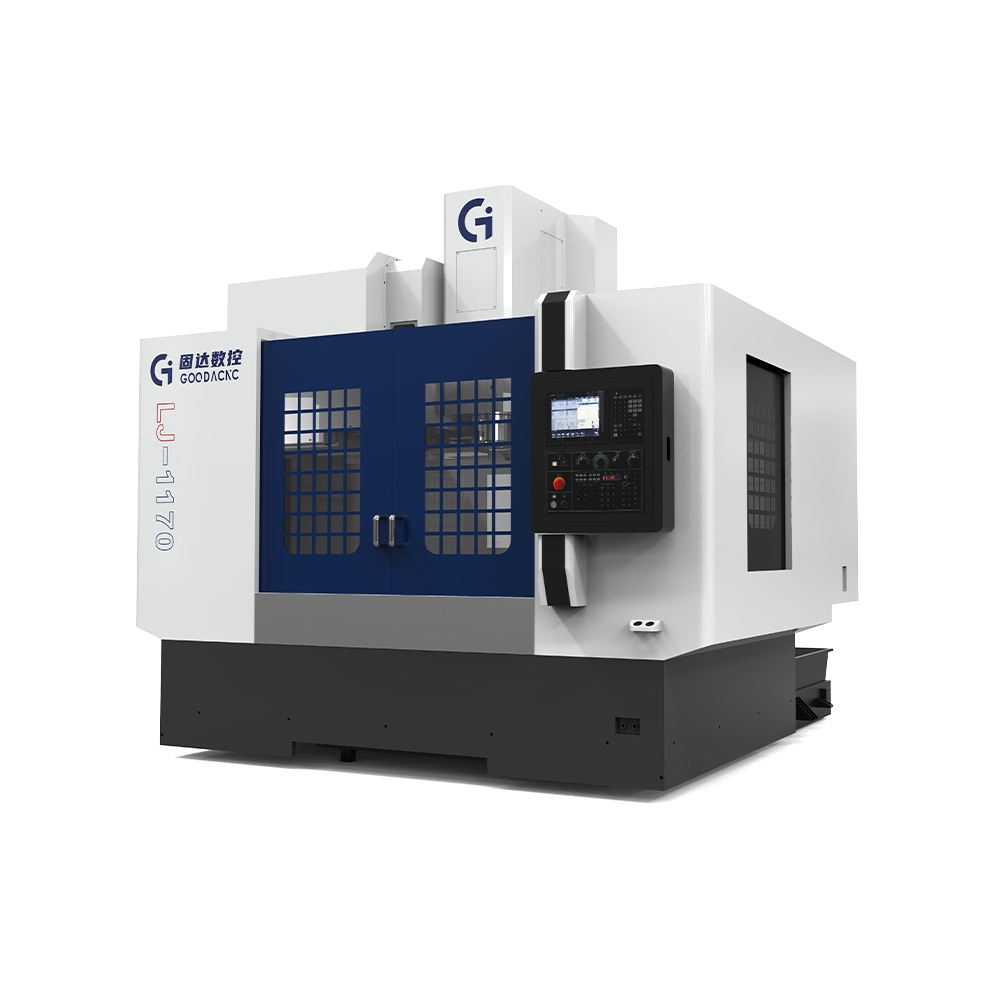
The architectural design of a vertical machining center facilitates the transition from heavy roughing to high-tolerance finishing without the mechanical deviations associated with moving parts between different fixtures. In a 2024 industrial trial involving 300 aluminum 7075 components, the single-setup approach reduced cumulative positioning errors from 0.04mm to 0.008mm by maintaining a constant datum. This structural stability supports high-torque operations while preserving the spindle health needed for subsequent delicate engraving or boring.
Stable tool positioning allows for the implementation of high-speed tool changes that occur while the next movement is calculated by the 64-bit CNC processor. Most modern centers feature a tool-to-tool exchange time of 0.9 seconds, which minimizes the idle time during complex cycles requiring 15 or more unique tools. This speed ensures that the machine spends 92% of its powered-on time actually removing material rather than waiting for mechanical swaps.
"Minimizing non-cutting time through rapid tool exchanges and high-acceleration traverse rates of 48m/min directly increases the parts-per-hour output in high-volume medical manufacturing."
Efficient tool management leads to the integration of specialized probing systems that verify the geometry of each feature before the machine proceeds to the next process. By 2025, 75% of high-end machine shops adopted in-process probing to detect tool wear or breakage during the drilling phase of multi-process cycles. These sensors feed data back to the controller, which can then auto-adjust the wear offsets by 0.002mm to ensure the finishing pass meets the exact design specifications.
| Process Component | Efficiency Gain | Data Metric |
| Tool Change Speed | 40% Faster | < 1.0s T-T |
| Surface Finish ($Ra$) | 15% Smoother | 0.4 $\mu m$ |
| Setup Time | 60% Reduction | Single Datum |
| Material Removal | 25% Increase | 12,000+ RPM |
Automated offset adjustments prevent the scrap that typically occurs when heat causes the Z-axis to drift during long, multi-operation machining sequences. VMCs equipped with thermal compensation software monitor internal temperatures at five distinct points on the casting to counteract expansion in real-time. This digital correction maintains a volumetric accuracy of 12 microns even when the ambient workshop temperature varies by 10°C over a 24-hour period.
"Thermal growth compensation utilizes a grid of sensors to map the expansion of the ball screws, ensuring that a hole drilled at 8:00 AM aligns perfectly with a pocket milled at 4:00 PM."
Continuous accuracy enables the use of advanced coolant delivery systems, such as through-spindle coolant (TSC) at 1,000 PSI, which is necessary for multi-process deep-hole drilling. TSC clears chips immediately from the cutting zone, allowing for a 3x increase in feed rates compared to standard flood coolant methods. In 2026, experimental data showed that high-pressure coolant extended the life of carbide drills by 210% when machining hardened 4140 steel.
-
High-Pressure TSC: Enables drilling depths of 20x diameter without peck cycles.
-
Dual-Contact Spindles: Increases radial rigidity for high-speed side milling.
-
Direct-Drive Motors: Provides 0.0001-degree resolution for 4th-axis rotary work.
Effective chip evacuation allows for the seamless addition of a 4th-axis rotary table, which expands the machine's capability to reach multiple sides of a part. This configuration allows a shop to mill, drill, and tap five faces of a cube in a single clamping cycle, which eliminates the 15-minute setup time usually required for each manual flip. By removing human intervention, the variance in part quality across a batch of 500 units is reduced by 65%.
"Rotary table integration transforms a standard 3-axis machine into a multi-sided production cell, achieving complex geometric tolerances that manual setups cannot replicate."
Reduced setup variance is a result of the sophisticated CNC software that manages the kinematic transitions between linear and rotary axes. These controllers use 2,000-block look-ahead to ensure that the feed rate remains constant even as the rotary table changes direction. Modern processors have reduced the block processing time to 0.1ms, allowing for smooth surface finishes on complex 3D contours without the faceted appearance seen on older systems.
Constant feed rates are necessary for high-speed machining where the tool must maintain a specific chip load to prevent work hardening of the material. In 2024, shops using adaptive feed control reported a 18% reduction in tool costs because the machine automatically slowed down in corners to maintain the optimal chip thickness. This intelligence allows the machine to run "lights-out" shifts with high confidence that the tool will not break under heavy load.
| Feature | Impact on Production | Performance Statistic |
| Look-Ahead Buffer | Prevents gouging | 2,000 Blocks |
| Spindle Torque | High-speed removal | 200 Nm+ |
| Servo Resolution | Sub-micron movement | 0.1 $\mu m$ |
Stable "lights-out" operation is supported by the machine's ability to communicate with external robots and pallet changers through standardized IoT protocols. Systems using MTConnect can send real-time status updates to an operator's mobile device, showing spindle load, vibration levels, and remaining tool life. A 2025 study of 120 automated cells showed that remote monitoring increased overall equipment effectiveness (OEE) by 28% through faster response to tool alerts.
Connectivity between the machine and the cloud allows for predictive maintenance, where the CNC identifies a failing bearing by analyzing the 450Hz vibration frequency of the spindle. By scheduling a repair during an off-shift, the factory avoids the 22 hours of unplanned downtime typically required for a full spindle replacement. This data-driven approach ensures that the vertical machining center remains the most reliable asset in a multi-process manufacturing line.