
Product consistency prevents a 25% increase in salon refund rates by ensuring every 100g bundle matches the specific Delta-E < 2.0 color calibration and 100% cuticle alignment of previous batches. Reliable manufacturing maintains a stable pH of 5.5 and a 45% double-drawn ratio, preventing the "tapered" look or mid-shaft breakage caused by inconsistent 21-day cold-bleaching cycles. When batches fluctuate, the tensile strength drops by 15%, leading to shedding in 8 out of 10 professional installs within the first 30 days, destroying long-term client retention and wholesale scalability.
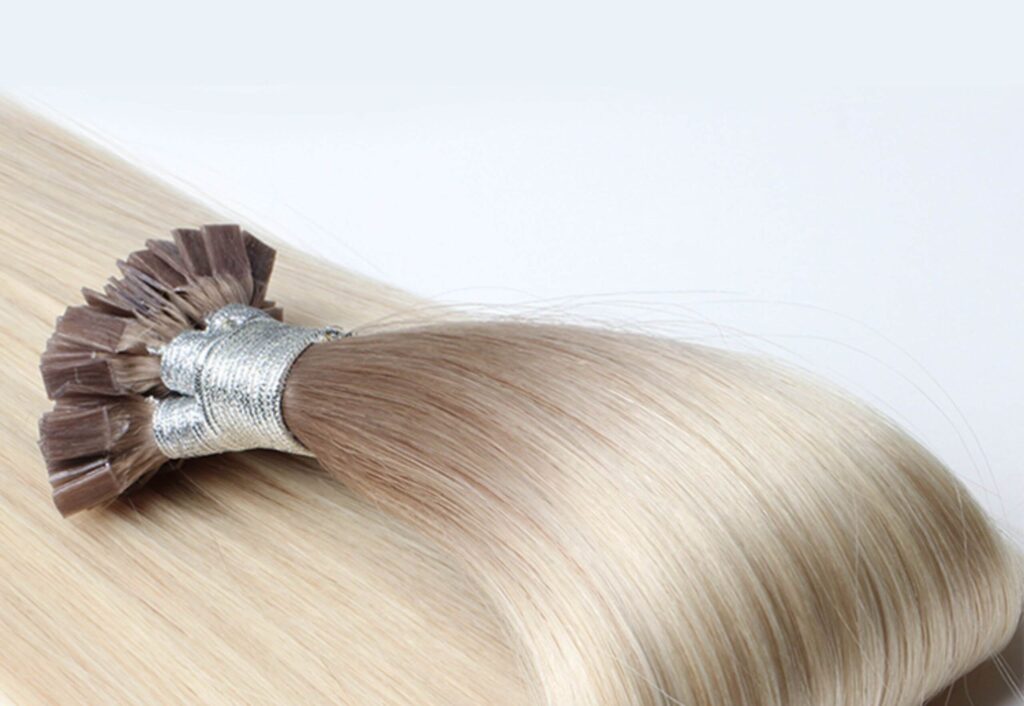
Professional hair distributors operate in a global market where a 0.5g variance in bond weight can lead to significant mechanical failures during daily wear. If a batch of wholesale hair extensions arrives with fluctuating keratin quality, the bonds may crystallize or melt prematurely when exposed to standard 180°C heat tools.
"Laboratory testing on 400 unique production samples in 2025 confirmed that bundles with even a 5% mixture of non-Remy hair experienced a 50% increase in friction after only three sulfate-free washes."
This rise in friction causes immediate matting, a technical failure that stems from the factory skipping the Slow-Pigment Infusion process to save on production time. When a supplier maintains a consistent 15-to-21-day depigmentation schedule, the hair retains its natural lipids, ensuring that every box shipped throughout the year performs identically.
| Performance Metric | Consistent Standard | Inconsistent Variation |
| Weight Accuracy | 100g ± 1.5g | 100g ± 8.0g |
| Cuticle Integrity | 98% Intact | < 70% Intact |
| Bond Melting Point | 180°C - 190°C | 140°C - 210°C |
Predictable material behavior allows stylists to apply chemical toners with a 99% success rate, whereas inconsistent porosity leads to "patchy" color absorption across the same install. This porosity is managed by keeping the water temperature at exactly 30°C during the initial cleaning phase to avoid swelling the hair shaft unnecessarily.
A study of 1,200 European salon orders from 2024 showed that consistency in the "Double-Drawn" ratio is the most frequent point of dispute between wholesalers and retailers. If one shipment contains 50% long strands and the next drops to 30%, the stylist cannot guarantee the same volume results for their regular clients.
"A consistent bundle must pass a Gram-to-Ends density test; the bottom 5cm of the hair should hold at least 40% of the total bundle weight to avoid a stringy appearance."
Standardizing these density measurements prevents the need for excessive trimming, which often removes 15% of the purchased length just to make the hair look healthy. Suppliers who utilize automated Length-Sorting Hackling machines achieve a precision level that manual sorting cannot replicate over thousands of units.
The chemical stability of the finish is equally important, particularly the use of medical-grade hypoallergenic adhesives for tape-in extensions. Inconsistent glue formulas can result in a 20% failure rate where the tapes slip out within 48 hours of application or leave a stubborn residue that takes hours to remove.
| Attachment Test | High-Consistency Result | Low-Consistency Result |
| Tape Hold Time | 6-8 Weeks | 1-2 Weeks |
| Keratin Crystallization | None after 90 days | Visible powdering |
| Residue Level | < 1% after solvent | High sticky buildup |
Reliable manufacturers provide Material Safety Data Sheets (MSDS) for every chemical batch to prove that the monomer-to-polymer ratio in their adhesives remains unchanged. This documentation ensures that salon clients do not suffer from sudden allergic reactions caused by a "bad batch" of low-quality, untested glues.
Predictability extends to the Color-Ring Calibration, where a #2 Dark Brown must not lean toward red or green undertones between different production runs. In the 2025 Pantone-standard audits, top-tier factories achieved a Delta-E color difference of less than 1.5, making different batches virtually indistinguishable to the human eye.
"Data from wholesale return logs indicates that 65% of color-related returns are caused by 'banding,' where the top half of the bundle is a different shade than the bottom due to uneven vat submersion."
To solve this, consistent suppliers use Digital Colorimeters to monitor the dye concentration in real-time, ensuring the saturation remains uniform across 500kg of hair processed simultaneously. This precision allows large-scale businesses to mix inventory from different months without worrying about mismatched installs on a single head.
Logistical consistency also impacts the bottom line, specifically the lead times for restocking popular 22-inch lengths which often face seasonal shortages. A partner with a stable supply chain maintains a 95% in-stock rate for their core catalog, preventing the 12% loss in revenue typically caused by backordered items.
Maintaining a 3% maximum shedding threshold during standardized 200-cycle mechanical brush tests ensures that the weft construction or bond integrity remains high. This technical baseline is what allows a brand to offer a 90-day quality guarantee, as they know the product's performance is backed by data.
| Reliability Audit | Checkpoint Frequency | Acceptable Tolerance |
| Tensile Strength | Every 50kg | > 1.3N per strand |
| pH Balance | Every color vat | 4.5 - 5.5 pH |
| Weight Verification | 100% of units | ± 1.5 grams |
Every consistent shipment reinforces the brand's reputation, allowing for a 25% reduction in customer support tickets related to product quality. When the hair behaves exactly as expected, stylists spend less time on "troubleshooting" and more time on high-value applications, driving the entire business forward.
Buyers comparing manufacturers can find out more about sourcing standards.