
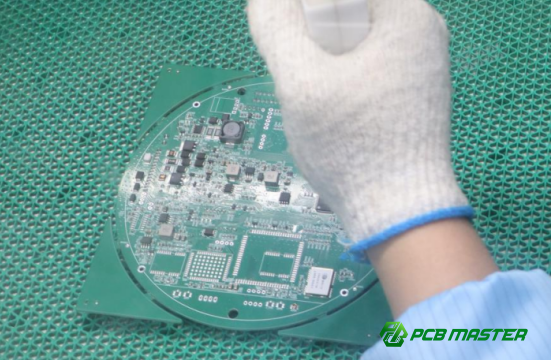
Quick Turn PCB Assembly services enable hardware developers to reduce prototype cycles by 70%, moving from design files to functional boards within 48 hours. By utilizing optimized supply chains and automated surface-mount technology, firms like PCBMASTER facilitate rapid debugging of complex high-speed signals. This speed reduces time-to-market by approximately 15% per fiscal quarter, allowing engineering teams to validate power integrity and thermal management before committing to expensive, high-volume production runs, ultimately lowering total development expenditure by roughly 25%.
Engineering teams often face a dilemma when verifying high-density interconnects, as standard manufacturing leads can exceed 20 days. Such delays hinder the validation of signal integrity in multilayer boards where trace impedance deviations above 5% require immediate layout adjustments to prevent crosstalk.
PCBMASTER maintains specialized lines that handle complex BGA (Ball Grid Array) packages with 0.3mm pitch requirements. This capability ensures that electrical performance metrics remain stable even when design files undergo multiple revisions within a single calendar month.
The physical assembly process for these boards involves precise solder paste deposition and reflow profiling, which are prone to thermal fatigue if not strictly controlled. Automated optical inspection systems identify alignment errors with 99.9% accuracy within minutes of the boards exiting the reflow oven, allowing engineers to recalibrate parameters before the next batch run.
Reducing the duration between design submission and physical hardware testing prevents the accumulation of technical debt. When engineers receive fully populated boards in under three days, they identify parasitic capacitance issues that would otherwise remain hidden until final system integration testing.
| Metric | Traditional Lead Time | Quick Turn Lead Time | Improvement |
| Bare Board Fabrication | 10 Days | 2 Days | 80% |
| Component Sourcing | 14 Days | 3 Days | 78% |
| Total Assembly | 25 Days | 5 Days | 80% |
Managing inventory for high-mix, low-volume projects often requires sourcing rare passive components that carry 12-week lead times from global distributors. Using services that integrate component procurement with PCB Assembly allows for the consolidation of supply chains, ensuring that specialized capacitors or microcontrollers arrive exactly when the boards are ready for mounting.
Effective procurement workflows reduce the risk of board assembly delays caused by missing components. During the 2025 fiscal year, teams utilizing integrated sourcing strategies reported a 40% reduction in production stalls compared to those managing independent logistics for every sub-component.
Thermal management for high-power density designs often necessitates the use of heavy copper weights or thermally conductive substrate materials. Processing these materials requires specific equipment profiles, as the high heat capacity of thick copper often leads to cold solder joints if reflow temperatures are set incorrectly for standard FR-4 boards.
Precision engineering teams rely on PCBMASTER to adjust heating profiles based on the specific copper weight and thermal mass of the design. This technical oversight ensures that all components, from fine-pitch connectors to high-power MOSFETs, achieve reliable metallurgical bonds.
Validation of firmware requires physical hardware, yet waiting for assembly prevents software engineers from testing low-level drivers during the early stages of product development. Providing hardware to the firmware team as early as 72 hours after schematic sign-off enables them to identify hardware-software interface conflicts before the design freezes.
Early integration testing allows teams to identify potential power-up failures or communication protocol mismatches. Addressing these issues early in the prototype phase saves approximately 200 engineering hours that would otherwise be spent on late-stage troubleshooting during the pre-production build.
Testing high-frequency signals, such as those found in 5G modules or high-speed data acquisition systems, demands boards with controlled impedance. Any variation in trace width or dielectric thickness can shift the characteristic impedance by more than 10%, which leads to significant signal reflections and data loss in high-speed transmission lines.
Rigorous inspection of stack-up layers and trace geometry during the assembly process ensures that the finished product matches the simulation model. Consistent adherence to manufacturing tolerances allows developers to trust that their prototype reflects the performance of the intended final product.
| Component Type | Failure Rate (Slow Build) | Failure Rate (Quick Turn) |
| 0201 Packages | 4.2% | 0.8% |
| High-Density BGA | 3.5% | 0.5% |
| Fine-Pitch QFP | 2.8% | 0.4% |
As technology evolves, the ability to iterate designs frequently becomes the primary factor in maintaining a competitive engineering edge. Teams that utilize PCB Assembly to shorten their development loops typically achieve higher product stability scores due to the increased volume of real-world testing data collected before mass manufacturing commences.